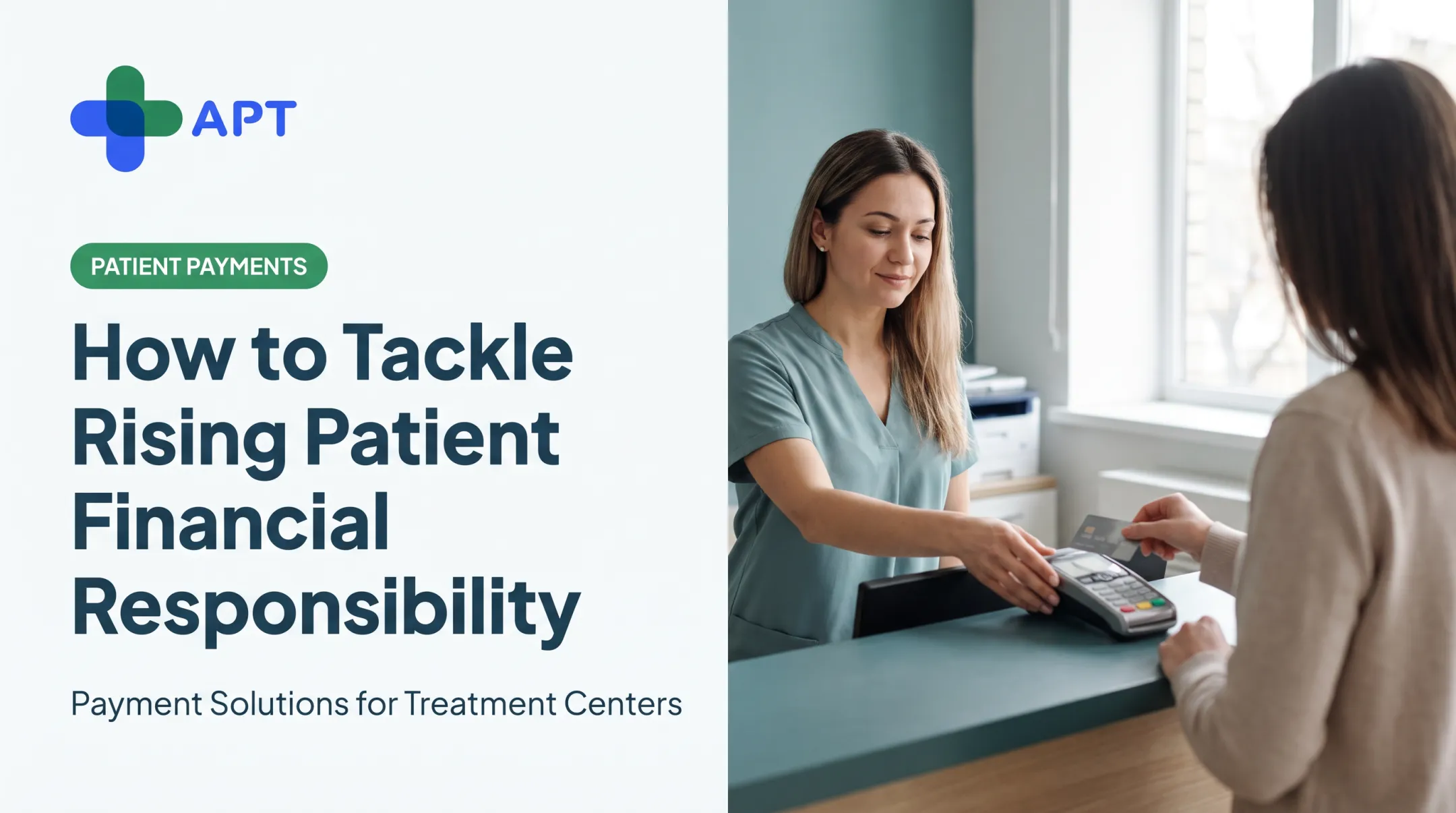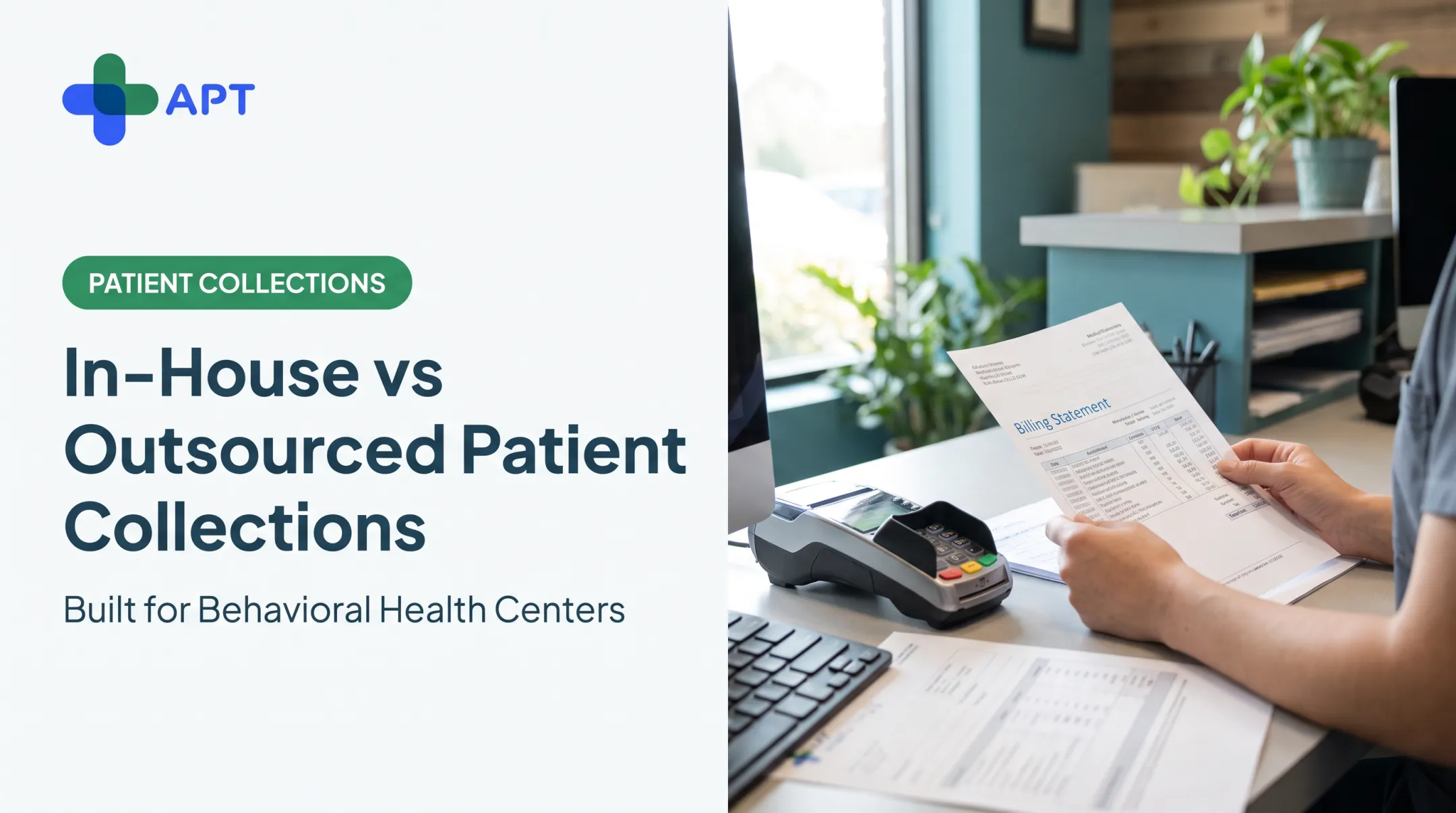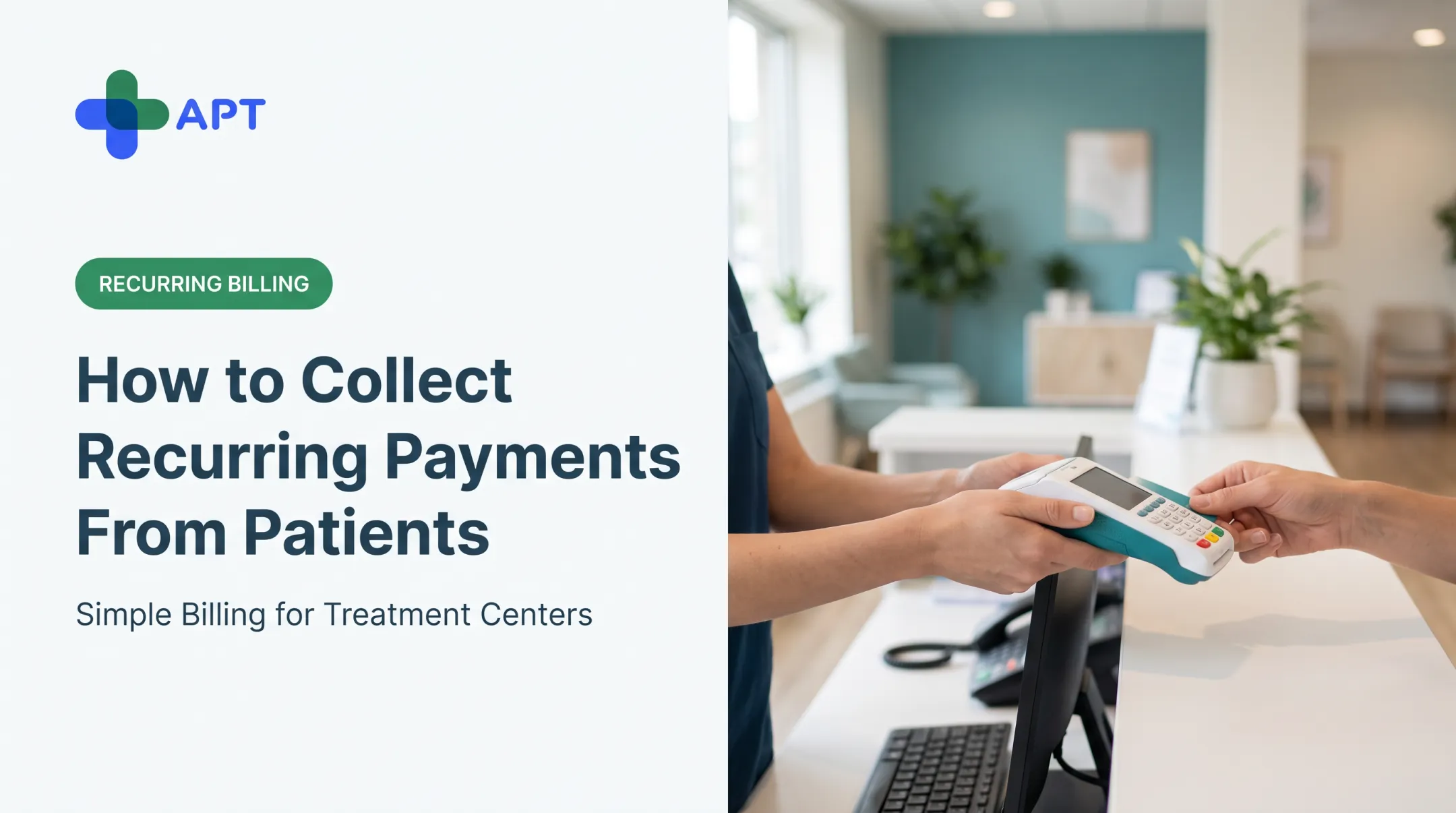

For behavioral health and substance use disorder (SUD) treatment providers, the pressure is specific: deductibles that patients didn't anticipate, uninsured balances, recurring program fees, and weekly housing charges. Many patients are also navigating financial stress alongside a health crisis, which makes the usual collections playbook feel tone-deaf fast.
This article walks through a patient-centered framework: setting expectations early, offering flexible payment methods, following up with compassion instead of pressure, and measuring what actually matters.
Key Takeaways
- Define who owes what, when it's due, and which payment options exist before care begins
- Replace late-stage collection pressure with empathetic communication and manageable payment plans
- Combine card, ACH, recurring billing, and pay-by-link tools with documented, compliant policies
- Track both collection performance and patient trust, not one at the expense of the other
What Are Self-Pay Patient Collections?
Self-pay patient collections are payments received directly from a patient or their responsible party, rather than from an insurance company or other third-party payer. The balance might include:
- Uninsured services
- Deductibles, copayments, and coinsurance
- Noncovered services
- Program fees for intensive outpatient or residential care
- Remaining balances after insurance has adjudicated a claim
Routine provider-managed collection is not the same as placing an account with a third-party debt collector. Policies, required notices, and legal obligations differ between the two, and treatment centers need to know which process they're actually running before a balance goes unpaid.
A Behavioral Health Example
How self-pay shows up day to day varies by setting. A treatment center may collect an intake deposit on day one, then bill a recurring weekly program charge for the next eight weeks. A sober-living house down the street may bill residents monthly for housing. Each is self-pay, and each needs a slightly different approach.
Self-pay management shouldn't start when an account goes overdue. It starts at intake, with financial agreements, consent, and a clear sense of what's owed and when.
Why Self-Pay Collections Are Difficult—and Why They Matter
Unpaid patient balances aren't just an accounting problem. They disrupt cash flow forecasting, add administrative workload, and at high volume can threaten a provider's ability to sustain services.
KFF estimates Americans owe at least $220 billion in medical debt, with roughly 14 million adults owing more than $1,000. That figure is national medical debt, not behavioral health–specific, but it shows how widespread the affordability problem is.
Behavioral health collections carry an added layer of sensitivity. Financial conversations often happen while a patient or their family is mid-crisis, navigating a treatment decision, early recovery, or a household that's suddenly managing one less income.
Three Recurring Barriers to Payment
Research consistently points to the same friction points:
- Patients don't understand the bill. Cedar's 2024 study found 28% of consumers delayed payment because of confusion about insurance benefits.
- Patients can't afford the full amount. In the same study, 72% named affordability as their biggest challenge; 63% couldn't cover an unexpected $750 expense.
- The payment process is inconvenient. Manual calls, confusing portals, or no self-service option push payment down the priority list.
Unclear statements, surprise charges, and inflexible payment demands slow collections. They also create disputes and burn out staff who field the same confused calls.
Those friction points are why measurement matters. Track the metrics that show whether billing is clear, affordable, and easy to complete:
- Payment completion rate
- Days to payment
- Failed-payment recovery
- Call volume and complaint rate
- Payment-plan performance
- Patient feedback
Kodiak reported a 3-percentage-point decline in collections from commercially insured patients between 2023 and 2024. That is a useful directional signal for general healthcare, not a benchmark for uninsured SUD self-pay. Use it as context, not a target to copy.

A Practical Self-Pay Collections Framework for Treatment Providers
Set Expectations Before Care or Enrollment
Intake is the best moment to prevent confusion later. Cover these points in plain language:
- Estimated financial responsibility and due dates
- Accepted payment methods
- Terms for any recurring charges
- Cancellation or refund rules
- Financial assistance or hardship pathways
- Who to contact with questions
A written financial policy and a plain-language agreement reduce disputes down the line. Don't promise a final number before insurance adjudication: estimate, don't guarantee.
Collect at the Earliest Appropriate Point
When policy and law allow, request an initial payment, deposit, or authorized payment method at enrollment. Before charging a card or initiating an ACH transaction:
- Confirm consent and the scope of authorization
- Provide a receipt
- Confirm the patient understands what's being charged and when
Offer Payment Options That Match Patient Circumstances
No single payment method works for every patient. A useful mix includes:
| Method | Best for |
|---|---|
| One-time card payment | Intake deposits, single charges |
| ACH | Larger balances, lower processing cost |
| Pay-by-link | Remote or asynchronous payment |
| Virtual terminal | Staff-assisted phone payments |
| In-person terminal | On-site payments |
| Payment plans | Larger balances needing time |
Recurring billing fits naturally for weekly program fees or monthly sober-living charges. Communicate billing dates clearly and keep a documented process for failed payments so a bounced charge never surprises anyone.
Use a Compassionate Follow-Up Sequence
A staged workflow works better than a single aggressive push:
- Send a reminder before the due date so patients can act early
- Issue a clear notice when a payment fails or becomes overdue
- Provide easy self-service access with a payment link, not a phone tree
- Follow up with staff outreach for questions or hardship conversations
- Escalate only when appropriate, and only after the steps above

Manage channel consent carefully for texts, email, phone, and portal messages. Communications and debt-collection requirements vary by channel and situation, so this isn't a "set it and forget it" policy.
Review and Improve the Process
Test message clarity, timing, payment-page usability, and failed-payment recovery. Apply changes consistently across patients, not case by case. Keep a short checklist for accounts needing special handling:
- Disputed charges
- Refund requests
- Duplicate balances
- Changed payer information
- Suspected financial assistance eligibility
Payment Technology, Compliance, and Performance Measurement
Match Technology to the Treatment Center's Workflow
Integrated payment tools cut down on manual entry, centralize transaction history, and show staff attempted and successful payments. Before choosing a platform, evaluate:
- EMR or practice-management compatibility
- Reconciliation workflows
- User permissions and audit trails
- Export capabilities
- Tools that support sensitive financial conversations
Prioritize Secure Payment Acceptance
PCI DSS sets the baseline for protecting payment data, and PCI SSC published version 4.0.1 in 2024, with new requirements effective March 2025. No single certification removes every obligation. Build controls around:
- Tokenization and P2PE where card data is handled
- ACH risk controls and verification
- Role-based access management and audit logs
Review applicable federal and state requirements before you turn on recurring billing, card surcharging, or text outreach.
Card-brand surcharge rules vary on their own: Visa caps credit surcharges at the lesser of the merchant discount rate or 3%. Several states—including Connecticut, Massachusetts, and Maine—restrict or prohibit surcharging outright. Check current state law before configuring anything.

Where Apt Financial Fits
Apt Financial is built specifically for behavioral health and SUD treatment providers. The platform supports major credit and debit cards, ACH processing, recurring billing, virtual terminals, pay-by-link functionality, in-person terminals, and multi-location workflows.
Capabilities that map to self-pay operations include:
- Transparent, transaction-based pricing with no hidden fees
- No long-term contracts
- Next-day funding on card transactions
- Dashboards that separate attempted vs. successful payments
- PCI DSS-certified processing with P2PE tokenization
- Dedicated support for treatment-center teams
None of this guarantees a collection rate—it is payment infrastructure, not a performance promise.
Track Actionable Collection Metrics
Once payments run through a consistent stack, monitor these regularly:
- Total patient responsibility vs. amount collected
- Collection rate by balance type
- Days to payment and aging
- Payment-plan completion and recurring-payment success
- Failed-payment recovery, refunds, and disputes
- Cost to collect
Segment by location, service type, payment method, and outreach channel. This surfaces workflow problems — a specific location with slow days-to-payment, for example — without assuming anything about a patient's willingness to pay.
Build a Vendor-Selection Scorecard
Before switching processors, ask vendors about:
- Pricing structure and contract length
- Settlement timing
- ACH and card capabilities, including surcharge configuration
- Reporting and integration options
- Security documentation and data ownership
- Implementation requirements and staff training
- Service-level expectations and verifiable references
Conclusion
Effective self-pay collections start with clarity and consistency, long before a balance becomes overdue. Convenient payment access, respectful follow-up, and measurable workflows then keep more balances collected without adding friction for patients or staff.
If your treatment center is evaluating whether its payment infrastructure fits these needs, Apt Financial provides card, ACH, recurring billing, pay-by-link, and reporting built for behavioral health collections. Contact Apt Financial at (404) 458-7294 to discuss your center's payment needs.
Frequently Asked Questions
Is it worth it to pay a debt in collections?
For valid balances, resolution can stop extra fees and further account damage. Have patients verify the amount and terms first, and point them to qualified financial or legal help if they dispute the debt.
How does self-pay work?
The patient or responsible party pays the treatment provider directly for uninsured care or any balance left after insurance adjudication. Payment is usually by card, ACH, or an agreed payment plan.
What is the best way to collect self-pay balances from patients?
Set clear expectations before care starts, offer early payment opportunities, send simple statements, and provide multiple payment methods with flexible plans. Consistent, respectful follow-up matters more than aggressive pressure.
Can healthcare providers set up recurring payments for self-pay patients?
Yes, when properly authorized, clearly disclosed, and securely processed. Recurring billing works well for ongoing treatment or housing charges, but review applicable legal and card-network requirements first.
What payment methods should a treatment center offer for self-pay patients?
Offer cards, ACH, secure payment links, phone-assisted payments, in-person terminals, and payment plans. Match the mix to patient needs and your operational controls.
How can treatment centers improve self-pay collections without harming the patient experience?
Use plain-language communication, train staff for compassionate conversations, and offer convenient digital payment options. Pair transparent policies and hardship pathways with measurement of both financial results and patient feedback.